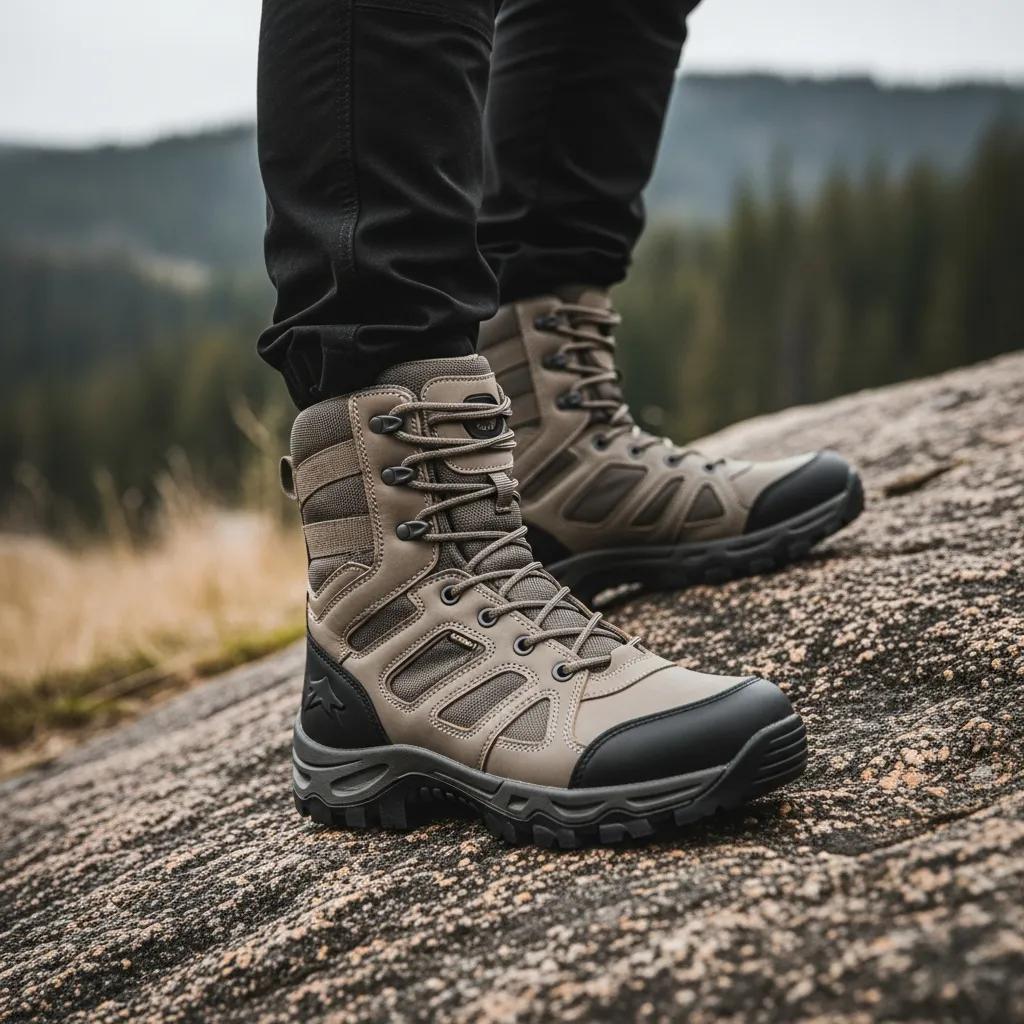
Best Tactical Boots for Comfort and Durability: A Practical Guide to Lightweight, Waterproof, and Reliable Footwear
Tactical boots are purpose-built footwear that balance protection, support and long-term durability for demanding work — think patrols, range days, rucking and hunting. Picking the right pair matters: the correct balance of comfort and toughness cuts fatigue, lowers injury risk and keeps you performing across different terrain and weather. This guide walks through the practical decision points — weight, waterproofing, midsole cushioning, outsole traction and upper build — and translates them into real-world use so you can match boots to how you actually move and work. You’ll learn what defines a comfortable, hard-wearing tactical boot; which lightweight builds deliver speed without losing support; how to choose waterproof options that still breathe; duty-grade features for law enforcement and military use; simple care routines that extend service life; and the leading innovations shaping the market in 2024. Along the way we give checklists, quick comparisons and clear recommendations for people who carry firearms or attend defensive training.
What Are the Key Features That Define Comfortable and Durable Tactical Boots?
Comfort and durability come from how the upper materials, midsole, outsole and fit features work together. Tough uppers use abrasion-resistant textiles or leather and reinforced stitching so the boot holds up under repeated flexing. Comfort depends on well-engineered cushioning and lasts that distribute load across the foot. Outsole compound and lug pattern turn material properties into usable traction on wet, rocky or muddy ground, and breathable liners plus moisture-managing insoles keep feet comfortable during long shifts. There’s a trade-off between shaving weight and keeping protective structure: lighter boots increase agility but can lose protection if weakened too far. Knowing how these parts interact helps you prioritize what matters most for your typical missions — pavement-heavy shifts, rough trails, or long hours at the firing line.
Footwear research consistently points to a few design elements that strongly influence perceived comfort.
Footwear Comfort Factors: Lightweight Shoes, Soft Midsoles, and Fit
Broadly, studies show (i) simple comfort scales give a reliable overall impression, (ii) well-fitting, lightweight shoes with soft midsoles and curved rocker profiles are often rated most comfortable, and (iii) the roles of sole flexibility, shoe microclimate and insoles vary with the user, task and environment.
Footwear comfort: a systematic search and narrative synthesis of the literature, HB Menz, 2021
Tactical boots hinge on a handful of consistent performance factors:
- Upper construction and materials that resist abrasion and keep shape under load.
- Midsole cushioning and support systems that reduce impact and stay comfortable over long wear.
- Outsole traction and rubber compound that grip a range of surfaces reliably.
- Fit features — last shape, toe-box volume and lacing systems — that lock the foot in place.
- Breathability and moisture control to prevent blisters and odor.
These elements interact — changing the upper or midsole affects breathability and lifespan — so material choices lead directly into how boots perform day to day.
How Do Materials Like Leather, Nylon, and Gore-Tex Enhance Boot Performance?
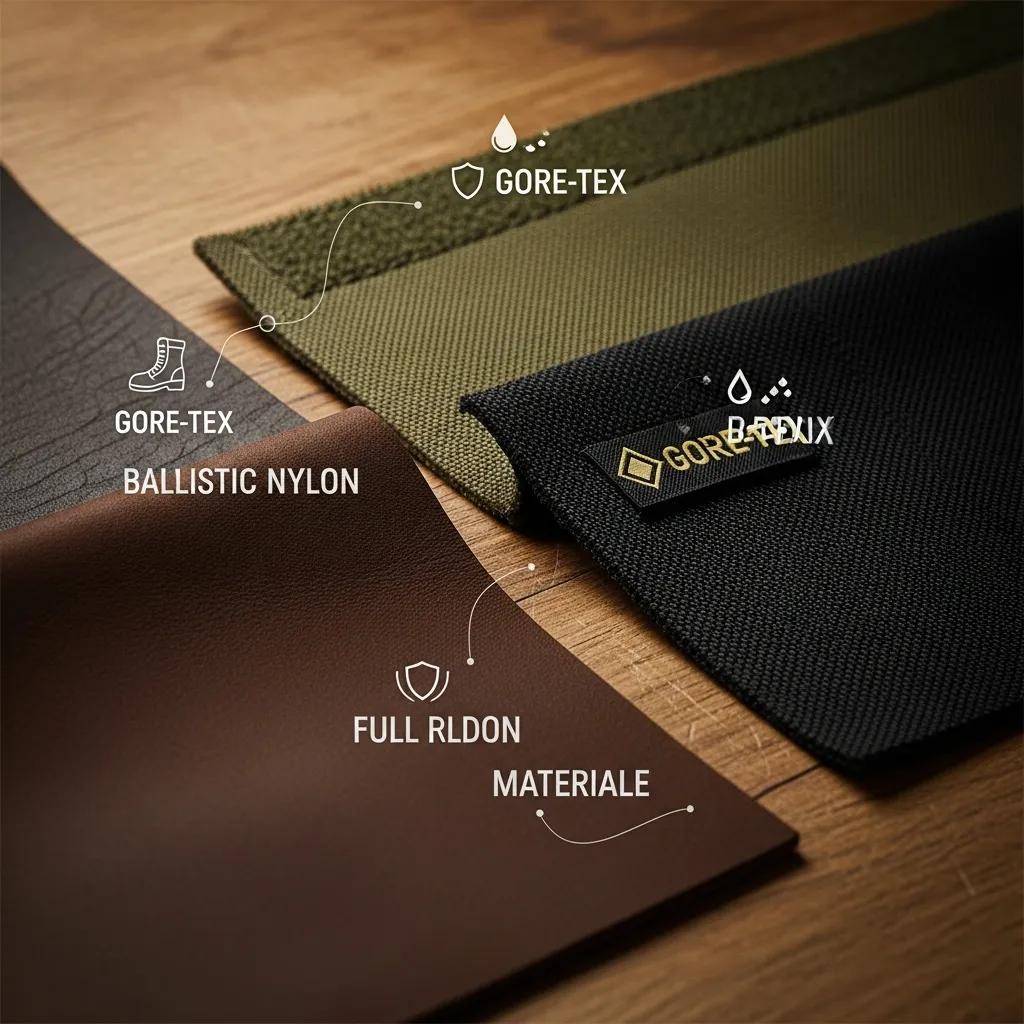
Uppers set abrasion resistance, weight and how a boot handles moisture: full‑grain leather brings durability and natural water resistance when treated, but it’s heavier and needs a break‑in period. Synthetic textiles such as Cordura or ballistic nylon cut weight and dry faster, which helps agility and comfort in dry-to-moderately-wet conditions. Hybrid constructions mix leather and synthetics to balance toughness and lightness. Waterproof membranes like Gore‑Tex block liquid water while allowing vapor to escape; the trade-off is that membrane-lined boots can feel less ventilated than open‑mesh models in very hot conditions. Match materials to how you use the boots: full‑grain leather for heavy scrub and frequent water exposure, nylon hybrids for long patrols where drying speed and weight matter most.
With those trade-offs in mind, the next crucial set of choices covers support, traction and breathability — the features that shape everyday comfort and safety.
Why Are Ankle Support, Traction, and Breathability Essential for Tactical Footwear?
Ankle support reduces sprain risk during lateral moves and when carrying loads, giving a stable base for shooting positions and quick transitions. Traction depends on lug geometry, depth and rubber compound — deep, multi‑directional lugs and sticky compounds help in mud and wet rock, while low‑profile multi‑surface outsoles work better on pavement and vehicle decks. Breathable, moisture‑wicking liners keep internal humidity down, lowering blister risk and odor over long shifts or multi‑day use. Together these features reduce fatigue and preserve mobility, so your choice should balance support with freedom of movement — deciding between mid‑height and high‑ankle cuts or aggressive vs. multi‑surface outsoles based on your needs.
If you attend firearms or defensive training, instructors commonly advise wearing sturdy, comfortable boots that mirror duty expectations — they stabilize stance and cut fatigue during extended drills.
Which Lightweight Tactical Boots Offer Superior Agility and Comfort in 2024?
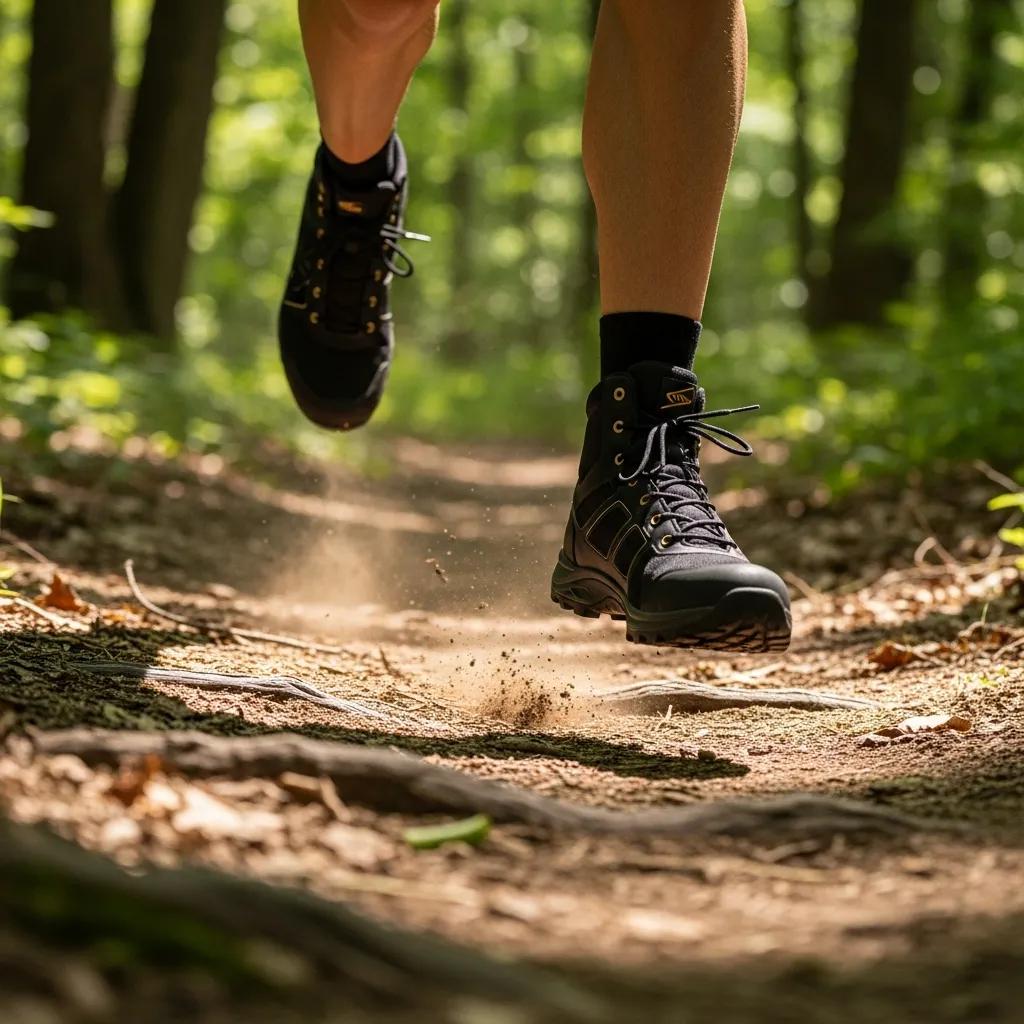
Lightweight tactical boots find agility by trimming mass from uppers and midsoles while keeping essential protections like toe reinforcement and supportive shanks. Brands reach “lightweight” by using hybrid uppers (leather plus mesh), low‑profile EVA or advanced foams and streamlined outsoles that keep traction without the extra bulk. The payoff is lower metabolic cost on long patrols or rucks — lighter boots mean less cumulative strain over miles. But lighter often means thinner midsoles that cushion less and uppers that may abrade faster, so weigh how much time you spend on rough terrain versus moving quickly over managed surfaces.
Top lightweight options generally fall into three practical categories:
- Speed/agility models that focus on minimal weight and quick drying for rapid movement and light loads.
- Long‑shift comfort models that prioritize cushioning and airflow for standing or non‑rucking roles.
- Hybrid duty trainers that blend protection with low weight for mixed urban and trail work.
Those categories set up straightforward brand and tech comparisons so you can match construction to your use patterns.
Below is a concise comparison of representative lightweight options to scan key attributes fast.
Lightweight choices aim to save mass while keeping structural support for agile performance.
What Are the Top Brands and Models for Lightweight Tactical Boots?
Brands trade different priorities: some chase ultralight speed and quick‑dry performance, others focus on durable materials while keeping weight down, and a few aim for all‑day comfort in the middle. You’ll see speed‑oriented styles that reduce upper mass with aggressive mesh panels, duty trainers with low‑profile outsoles and ergonomic lasts for long standing, and hybrid patrol boots that add leather reinforcements where they matter. Price often reflects material and construction quality, but you can find value in models that use targeted reinforcements instead of full leather. When comparing models, check weight, midsole resilience and insole quality to find the right balance of comfort and longevity for your needs.
Often the deciding factor is midsole material — mainly EVA versus PU — since that dictates how cushioning holds up under load.
How Do EVA and PU Cushioning Improve Long-Shift Comfort?
EVA gives immediate, lightweight cushioning and a soft underfoot feel, which is why many lightweight tactical boots use it. The downside is EVA can compress over time under repeated heavy loads, reducing shock absorption after months of use. PU midsoles or PU‑infused blends are more resilient and resist compression better, so they keep cushioning and support longer for rucking or multi‑shift duty. Practical advice: choose EVA for quick‑movement, lighter‑duty roles and PU or PU blends if you carry weight or expect long consecutive hours on your feet.
Knowing how midsoles behave helps set expectations for comfort life and when to resole or replace the midsole.
How to Choose the Best Waterproof Tactical Boots for All Weather Conditions?
Picking waterproof tactical boots means checking waterproof tech, breathability, seam construction and the environments you’ll face. Membranes like Gore‑Tex stop liquid while allowing vapor out, making them a strong choice for sustained wet conditions. DWR finishes and treated leathers repel water for intermittent exposure and usually breathe better at first, but they need occasional reapplication. Seam sealing and gusseted tongues cut off water entry at vulnerable points — construction matters as much as the membrane. Match the tech to use: membranes for continuous wet work, treated leather where breathability matters, and hybrids when you need both in mixed climates.
Design and development work has long aimed to build integrated, lightweight, waterproof combat boots that handle a broad range of conditions.
Lightweight, Waterproof Combat Boot Development for All-Season Wear
This study describes creating an integrated, lightweight, waterproof, flame‑resistant combat boot for temperate, all‑season use. The prototype, Model SBN‑88, included a puncture‑resistant, mud‑shedding traction sole and a removable chemical‑resistant bootie.
Development of an Integrated, Lightweight Combat Boot. Phase 1, 1988
To compare membrane technologies, here’s a simple rundown of common options and how they typically perform.
Use this table to match waterproof tech to environment and activity.
This comparison shows membranes give the best continuous protection while treated leather trades some water resistance for better breathability and simpler upkeep.
Use this three‑step checklist to evaluate waterproof performance alongside breathability:
- Confirm a sealed membrane or fully taped seams for continuous wet exposure.
- Match upper construction (hybrid leather/mesh vs. full leather) to your breathability needs.
- Look for gusseted tongues, DWR finishes and replaceable insoles to manage in‑boot moisture.
Those checks steer you toward boots that keep you dry without trapping sweat. When attending firearm safety or self‑defense training, instructors often recommend waterproof yet breathable boots so you stay comfortable during outdoor drills and long standing periods. Complementary gear like moisture‑wicking socks and protective accessories also pair well with waterproof footwear.
What Waterproof Technologies Like Gore-Tex Are Most Effective?
Gore‑Tex is a proven waterproof/breathable membrane that uses a microporous PTFE layer to stop liquid water while letting vapor escape. Its effectiveness depends on proper integration into the boot — the membrane should be bonded and seams sealed to prevent leaks at stitch lines. Proprietary membranes aim for similar results but can vary in breathability and durability; check independent tests or breathability specs when possible. DWR coatings on leather repel surface water and are easy to maintain but wear off over time and need reapplication. For heavy rain or immersion, choose membrane‑lined boots with strong seam sealing; for hot environments where sweat is the main concern, ventilated hybrids or treated leathers may feel more comfortable.
Evaluating these construction trade‑offs helps you pick boots that breathe well while keeping feet dry in real‑world conditions.
Which Boots Provide Optimal Breathability While Staying Dry?
Designs that balance breathability with water resistance use hybrid builds — water‑resistant leather or membrane panels where splashes hit and breathable mesh where airflow matters. Vented insoles and moisture‑wicking liners move vapor away from the foot, improving comfort in warm weather. Sock choice matters: moisture‑wicking technical socks plus breathable boots greatly reduce in‑shoe humidity. For climates with occasional wetness followed by heat, look for treated uppers and replaceable vented footbeds; for consistently wet conditions, accept slightly less breathability in favor of a membrane that keeps feet dry.
These combinations help prevent blisters and protect foot health during extended activity.
What Tactical Boots Are Recommended for Law Enforcement and Military Duty?
Duty boots prioritize steady comfort under long wear, slip‑resistant outsoles for mixed surfaces and construction that meets uniform or operational requirements. Look for a supportive last that prevents over‑pronation, midsoles that resist compression under load and outsoles with oil‑ and slip‑resistant compounds for vehicle decks and wet floors. Reinforcements in high‑wear areas — stronger heel counters, toe overlays and double stitching — extend life under tough duty cycles. Some roles require low‑profile or plain‑toe styles for plainclothes work, while patrol or field ops benefit from higher cuts for ankle protection. Choosing resolable designs and predictable wear patterns lowers lifecycle costs for departments and individuals on rotation schedules.
When specifying duty boots, focus on how features translate into operational outcomes so footwear supports training and deployments.
How Do Tactical Boots Support Range Training and Patrol Activities?
Good tactical boots stabilize stance, help distribute recoil forces and reduce fatigue during long stands or repetitive movement. Outsole patterns that give lateral grip help maintain control during drills and transitions, and stiffer midsoles or shanks add steadiness when shooting from varied positions. Breathable, cushioned insoles reduce micro‑movement in the foot, keeping your base more consistent across repetitions. For patrol work, abrasion‑resistant uppers and reinforced toes protect against wear from vehicle egress, curbs and mixed surfaces. That’s why boot selection should be treated as part of training — the right footwear directly affects performance in practice and on duty.
Conceal It & Grill It Liberal Kansas operates as a retailer specializing in firearms, optics, parts and supplies and runs firearm safety and self‑defense training courses; for students we recommend sturdy tactical footwear that mirrors duty expectations so stance is safe and fatigue is reduced during drills. Suggesting the right boots helps students stay focused on skills instead of discomfort.
What Features Make Boots Suitable for Self-Defense and Duty Wear?
Useful features for self‑defense and duty roles include firm, low‑profile midsoles for quick footwork, strong traction for rapid directional changes and optional protective toes where hazards exist. Composite or steel toes add crush protection but increase weight and reduce flex — choose them when handling heavy equipment or frequent vehicle work is routine. Low‑profile models with solid ankle support work well for concealed carry or plainclothes roles that need agility and a low visual profile, while high‑ankle, rugged boots suit fieldwork that requires maximum ankle protection. Always match protective features to the real hazards and mobility needs of your job so safety gains don’t unnecessarily cut into agility or comfort.
How to Maintain and Extend the Lifespan of Your Tactical Boots?
Simple maintenance preserves comfort and durability and extends a boot’s useful life. Follow a five‑step care routine: clean abrasive debris after use, condition leather uppers appropriately, dry without heat, inspect for sole separation or stitch wear and resole when tread or midsole integrity declines. Regular care prevents leather cracking, keeps membranes from clogging and slows midsole compression. Make seasonal upkeep a habit — clean after heavy use, condition leather quarterly and air liners after wet days — and you’ll add months or years of reliable service to boots used in demanding roles.
Follow these actionable steps to keep boots performing longer:
- Remove dirt and grit after heavy use to limit abrasive wear.
- Use a soft brush and mild cleaner suited to the upper material; avoid harsh chemicals.
- Condition leather sparingly with the right product and reapply DWR as needed.
- Dry boots at room temperature with absorbent stuffing; avoid direct heat that damages adhesives.
- Inspect seams, laces, eyelets and outsoles monthly and resole when tread depth or separation appears.
What Are the Best Practices for Cleaning and Conditioning Tactical Footwear?
Care varies by material: leather benefits from gentle brushing, pH‑balanced leather cleaner and occasional conditioning to stay supple without over‑softening; synthetics clean well with mild soap and water and dry quickly; Gore‑Tex‑lined boots should be cleaned externally and left to air dry, with membrane‑safe products only if the manufacturer recommends them. Avoid machine washing or high‑heat drying — those can delaminate glued parts and break down midsoles. After cleaning, reapply DWR to treated uppers as needed and rotate boots so each pair fully dries between uses. These steps reduce failure modes and preserve the comfort built into the midsole and fit.
Following material‑appropriate care makes clear how ongoing maintenance pays back in comfort and lifespan.
How Does Proper Care Affect Comfort and Durability Over Time?
Regular maintenance keeps leather flexible and prevents cracks that let in moisture and reduce comfort; it also reduces midsole wear by keeping abrasive dirt out of the foam. Replacing worn insoles and addressing minor sole separation early can restore much of the original comfort and add months or years to usable life. From a cost‑benefit view, a little time spent on cleaning and occasional conditioning delays replacement and preserves consistent ergonomics, which helps prevent foot fatigue and injury. Track wear patterns — uneven outsole wear or localized creasing — and use that information to resole or replace before comfort and performance decline.
Which Tactical Boot Brands Lead the Market in Comfort and Durability for 2024?
In 2024, top brands stand out through material science, construction methods and attention to user tasks — some push lightweight speed, others deliver heritage durability, and some focus on duty modularity. Market trends include more sustainable materials, antimicrobial linings to control odor and adaptive midsoles that better match gait. These innovations deliver more predictable comfort and longer service intervals; many manufacturers now offer resolable constructions or modular outsoles that extend lifecycle value. Compare brand innovations to your priorities — longevity, low weight or easy cleaning for training environments — to pick what fits your routine.
Below is a quick table summarizing each brand’s hallmark and what it delivers.
What Are the Unique Features of Brands Like Garmont, Danner, and 5.11 Tactical?
Each brand balances comfort and durability differently: Garmont leans into lightweight geometry and flexible performance for agility; Danner focuses on proven construction like stitch‑down or welted assemblies and resolable designs for long service life and repairability; 5.11 Tactical targets duty ergonomics and modular features like removable insoles and law‑enforcement‑friendly options. Your choice should match whether you value low mass and speed, long‑term reparability or standardized duty features that align with training needs.
Understanding those brand differences makes it easier to match innovations to everyday performance.
How Do Brand Innovations Influence Tactical Boot Performance?
Advances — better membranes, antimicrobial liners, biomechanically adaptive midsoles and greener materials — improve outcomes by reducing moisture issues, limiting odor, improving shock absorption across the gait cycle and lowering environmental impact. Antimicrobial liners keep the interior fresher longer, which supports comfort by protecting footbeds and liners. Adaptive midsoles tune cushioning across stance phases, offering both stability for standing and responsiveness during movement. These refinements shrink the trade‑offs between weight and durability and deliver tangible benefits in training and duty contexts. If you attend firearm safety or self‑defense courses or buy from specialized retailers, these innovations shape our gear recommendations and care advice.
As you shop, consider training and gear options from trusted local providers — Conceal It & Grill It Liberal Kansas, for example, pairs retail and training services to help buyers align boots and equipment with skills development.
If you take courses, ask instructors which boots they recommend and how to maintain them for the environments you’ll train in.
Frequently Asked Questions
What should I consider when choosing tactical boots for different climates?
Match boots to the climate: for wet environments choose membrane‑lined models (Gore‑Tex or equivalent); for hot climates prioritize breathability and treated leathers that dry quickly; for cold weather add insulation. Think about the pattern of use — intermittent splashes vs. sustained wetness — and pick the combination of waterproofing, breathability and insulation that fits those conditions.
How do I know if my tactical boots fit properly?
Fit is critical. With the socks you’ll wear, you should have about a thumb’s width between your longest toe and the front. The heel should hold snug without slipping and the arch should sit comfortably on the last. Walk, squat and change direction to check for pressure points or hot spots before you commit.
What are the benefits of using moisture-wicking socks with tactical boots?
Moisture‑wicking socks pull sweat away from the skin, keeping feet drier and reducing blister risk, odor and fungal issues. Many technical socks also provide targeted cushioning and support, improving comfort during long shifts or vigorous activity. Combined with breathable boots, they significantly improve in‑shoe climate control.
How often should I replace my tactical boots?
Replacement depends on usage and care. Look to replace boots when soles are badly worn, the upper no longer supports the foot, or cushioning has lost its effectiveness. Heavy users may need new boots every 6–12 months; lighter users can often go 1–2 years. Regular inspection and maintenance will maximize service life, but don’t wait until comfort or protection is compromised.
Can I use tactical boots for activities other than military or law enforcement?
Yes. Tactical boots work well for hiking, camping, hunting and outdoor work — their durability, support and traction make them versatile. For non‑duty use, prioritize the features that matter for your activity: weight, breathability and traction for trails, or protective toes and resolable soles for heavy work.
What maintenance practices can extend the life of my tactical boots?
Regular care extends life: clean off dirt after use, condition leather appropriately, air boots to dry fully after moisture exposure and inspect for wear monthly. Fix small issues early — replace insoles, repair seams, resole when necessary — and reapply water‑repellent treatments as needed. Those steps preserve comfort and delay replacement.
Conclusion
Choosing the right tactical boots improves comfort, durability and performance across demanding activities. Learn the core features — waterproofing, breathability and support — and match them to your environment and task. Use the checklists and comparisons here to narrow choices, try boots with the socks you’ll wear and maintain them to extend life. Explore our curated picks from proven brands and take the next step toward footwear that supports your work and training.